
Working Conversations Episode 276:
When a Coworker's Kids Are Affecting Your Work: How to Address It
Powered by RedCircle
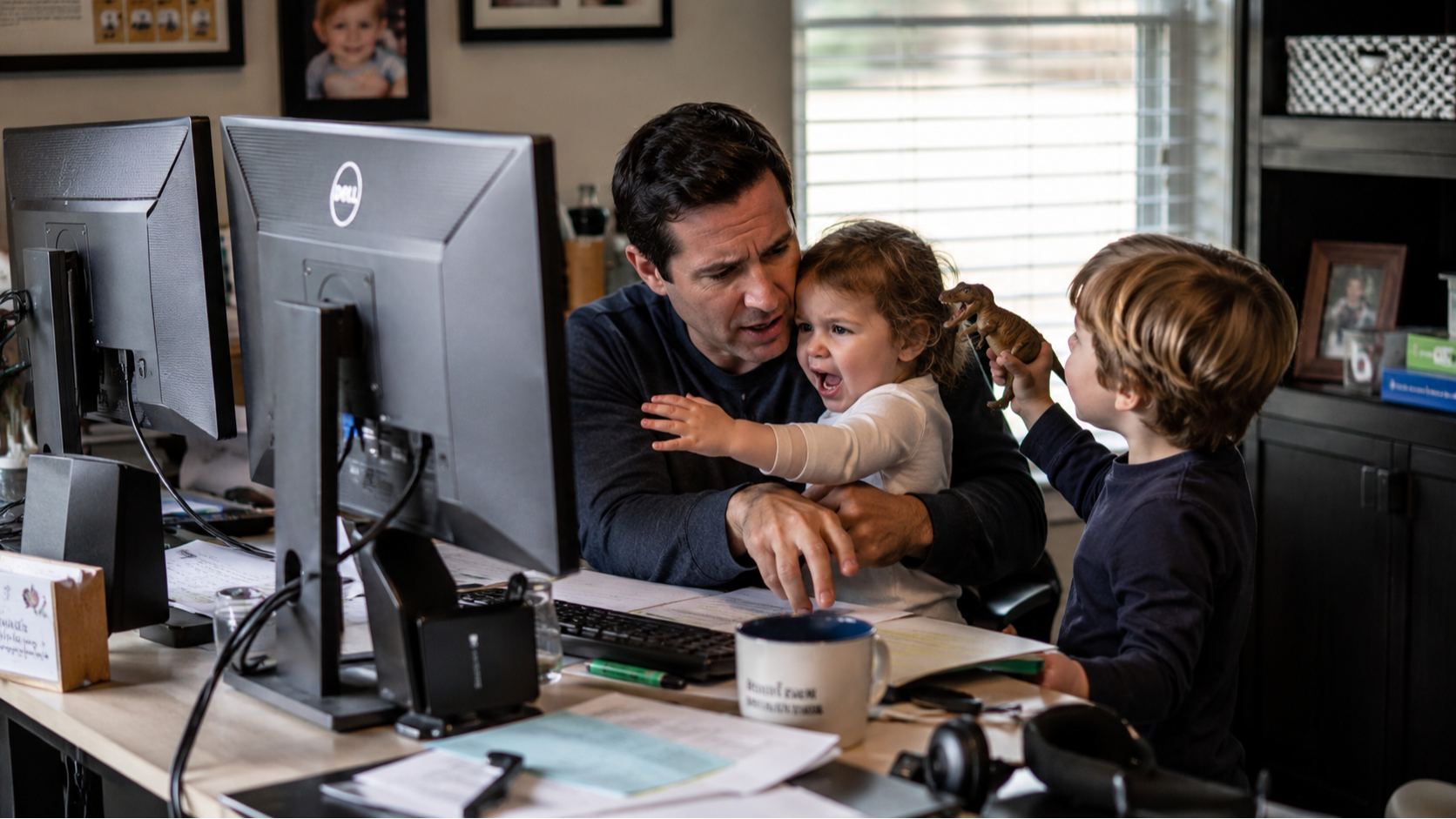
When a coworker working from home with young kids starts affecting the rest of the team, most managers and peers do the same thing: they sit on it. They feel guilty naming it. They tell themselves it would be unkind to bring it up. So they resent it quietly, until it blows up or lands in HR.
Summer has made this worse. School is out, childcare gaps are real, and the gap between working from home and working from home while parenting full time is getting harder to ignore. If you've been watching this play out on your team and not saying anything, this episode is for you.
In this episode, I tackle the real discomfort head-on: why people feel guilty raising a performance issue connected to caregiving, why that guilt is making things worse for everyone including the caregiver, and what the conversation actually needs to sound like. The key reframe is this: you are not talking about someone's parenting or their personal choices. You are talking about the work, the deliverables, and the team impact. Those are two completely different conversations.
I walk through a four-step framework for having this conversation, with a separate path for managers and peers, because your role determines exactly what you can do and say. You will learn how to lead with observable work impact instead of inference, how to make space for context without letting it derail the conversation, how to define what workable looks like if you are the manager, and why compassion and accountability are not opposites.
If you have been tiptoeing around this situation, this episode gives you the language and the confidence to address it directly. Compassion without clarity is not kindness. It is avoidance.
Listen and catch the full episode here or wherever you listen to podcasts. You can also watch it and replay it on my YouTube channel, JanelAndersonPhD.
EPISODE TRANSCRIPT
I have a coworker, or maybe it's a direct report, who's working from home with young kids, and honestly, it's starting to impact the rest of the team. Deadlines are slipping, that person's hard to reach, and I can hear the kids in the background, and sometimes even on camera in every call I feel bad even saying this out loud because I know parenting is hard but something's got to give How do I address this without being the bad guy this question is landing a lot in my inbox right now summer is in full swing school is out and the gap between working from home and working from home while parenting full time is getting harder and harder to ignore. Now this is a real issue, and I want to talk about it honestly, because I think a lot of people are dancing around it and just don't know what to do with it. Now let's tease apart what's actually happening here, because the discomfort around this topic is actually worth unpacking, and it's nuanced, and it's weird, because six years ago, when we were in the midst of a pandemic, everybody had to do this, they had to work full time with kids underfoot, no matter what the age, and in fact, during the school year, it was probably even worse, because if they had young school-aged kids, they were working full time while shepherding those kids through, you know, online first grade or something like that, which took a lot of hand holding.
I had at that time older elementary school student, but still it was hard. Okay, but it set the foundation for this is workable or this is doable now. It was workable or doable then, because we had no other choice. And most organizations have taken on a hardline policy that you can't be a full-time caregiver and a full-time worker at their company at the same time.
Now, most places do have that written in their policy is everybody following the rules on that? Not necessarily. In fact, I've heard more than one situation where somebody's got a two year old tucked under the proverbial desk at home and they're, you know, they think they're getting away with it. I think the perception on the part of the full-time caregiver who is, you know, quote unquote getting away with it is very, very different.
I don't think they realize the extent to which this is truly impacting the rest of their team. Now, if you are that person, I am not. This is not a passive-aggressive episode to you or about you, but if you do happen to be that person. I want you to listen to this episode through the lens of what life is like for your coworkers or your manager, because that's the perspective I'm taking on this.
If for the folks who are full-time parenting and full-time working, you're not the ones who are coming to me. If you were, and I had your questions. I would do an episode from your perspective, but you're not the ones who are coming to me. The ones who are coming to me are the managers of and the coworkers of people who have young children and are working an angle here where they're full-time caregiving and doing their full-time job, so again I also want to acknowledge that the reason that people feel guilty raising this issue is that we've collectively agreed that caregiving is sympathetic and that caregiving is hard, and again coming out of a pandemic situation where people were forced to do both at the same time puts us in a somewhat different position.
If this was 10 years ago, when a pandemic never happened, I wouldn't even be doing an episode about this, because that distinction between parenting and work was very clear. When you had small children, you got daycare, you had some sort of a childcare provider, if you were going to be working in any full-time capacity. Now, again, it changes a little bit when kids are school-aged, and what we'll get into the nuance around the age. We'll also get into some of the nuance around the season, because even those parents who have children in school who are a little bit older and don't really have this as an issue during the school year, are maybe faced with some different challenges during the summer, because either you know summer camps are not the same hours as work hours, or maybe there aren't enough summer camps, or enough childcare to go around in the summertime, so anyway, I do want to acknowledge, though, the reason that people feel guilty about raising this issue is that we have collectively agreed that caregiving is important in our culture, and we know that there, that caregiving for child care is ridiculously expensive, and that there is not enough of it really across the nation right now, so it's it's sensitive ground to cover, to be sure, and calling it out as a performance issue, if you're a caregiver, or calling out a caregiver as having a performance issue around caregiving seems insensitive, so managers and coworkers are sitting on it, oftentimes resenting it quietly, and eventually either blowing up about the problem, or letting the problem get so big it becomes a formal HR situation, or oftentimes talking to anybody, they, anybody who will listen to them about it, except for the person who is the, you know, committing the transgression of full-time caregiving and full-time working at the same time, and none of that is good for anyone.
Certainly, isn't getting the work done, and for the person who is probably very stressed out about the full-time caregiving and the full-time work, it's not helping them either by skirting it or not talking about it. Okay, so here's a reframe that we need to put on this before we even get any further. This isn't a conversation about somebody's parenting. This isn't a conversation about somebody's personal choices.
This conversation needs to be about the work, the output, the team impact, and the things that are work-related. Okay, that's how we're going to address this from a workplace conversation standpoint. So we're just going to simply focus on the work now. There may be some instances in which, especially as we think about school-aged children needing, let's say, rides to summer camp or half-day camps.
I know there's a lot of half-day camps. Somebody's going to soccer camp from 9am till noon, that means they need a ride at 830 to get them to soccer camp, and then they need to be picked up at noon, and you know, and some of that's going to time out nicely with lunches, but inevitably and invariably there's going to be some times when it just doesn't time out that good, so again we need to be focusing not on whether or not somebody's choosing to do that, especially again on those part-time instances where it's like give a child a ride to a camp or to a friend's house or something like that during the summertime, that's qualitatively different, and I think it's going to resolve itself as soon as school starts up again, compared with somebody who is truly full-time caregiving at the same time that they are working a full-time job. Okay, now again, we're going to keep our conversations here focused on the work, you can have enormous compassion for how hard it is to parent and how hard it is to parent young children, while also impressing upon somebody the importance of meeting their professional commitments and getting their job done. Okay, so we can hold both of these things, but in this conversation, and when we can certainly acknowledge how challenging parenting is, and how expensive caregiving is, we can absolutely acknowledge that, but then we're going to turn this conversation to be about the work, because that's what good management looks like.
It looks like acknowledging the challenges, but then focusing on the work, and if the work is not getting done, or if the work is not getting done to the level of quality that it should, then the caregiving has become a problem. Now, of course, if your organization has a policy that you cannot be a full-time caregiver at the same time that you are a full-time worker in your organization with overlapping hours, then of course you need to bring that up right there from a policy standpoint, and we're going to bring up the work reasons why the policy exists, and that they need to get themselves in compliance if they want to remain gainfully employed with your organization, and if you are a manager and you are not having that conversation, and that is the reality of the situation, I want to fully embrace right now, and give you the.. I'm not going to embrace you through the podcast, but I want to embrace you in having this conversation, and I want to know that I want you to know that I've got your back, and that you need to go have this conversation, not just for that employee and the work that's not getting done, but for the rest of the team, because if you're not having that conversation, and that is what is, so you know who knows everybody else on the team, and they are so wishing you would have that conversation. Okay, so I've got your back on this one.
Go have that conversation. You need some extra coaching on that. Drop in my inbox, I promise you, I will give you some coaching on that, but you need to go have that conversation. That is, this is our policy, this is what I observe is happening, and these two things cannot coexist.
So, how are we going to solve for this? Okay. All right. Now, this comes up too with elder care, a team member caring for an aging parent, for example.
And I just want to give a quick nod to that. And one thing that I've seen is qualitatively different now, not in every case, so this is anecdotal data I'm providing here. I don't know if there's been any exact studies on this, but what I have noticed is that when somebody needs to take an aging parent to a medical appointment, or maybe there's a surgery that they need to shepherd them through some caregiving afterwards, people do tend to be more straightforward about taking time off, requesting time off, taking a vacation day, if it gets to be a really, really big commitment. Sometimes, even taking family medical leave, FMLA act is there for these exact kinds of reasons, and I've seen people - again, this is anecdotal - but I've seen people be a little bit more on the up and up as it relates to caring for an aging parent, as opposed to caring for a young child who's not in a daycare setting, so, but, but it could also happen with caring for any, you know, whether it's an aging parent or a family member with disabilities, or any number of things like that.
I've seen the small children try to get more, you know, quietly absorbed into the workday, which is ironic, because the small children are the least likely to be quietly absorbed into the workday, and they are the most likely to know to have a noticeable impact on the person's performance and the team, so but I just wanted to call that out. I also want to double down on this important distinction of working from home with older kids who can mostly self manage during the summer, but maybe need rides to different places, to different places, whether that's camps or friend's house or part-time jobs or anything like that, that is qualitatively different from working from home as a primary caregiver for toddlers with no childcare. Okay, the latter is not a remote work arrangement. It is an unworkable situation that is not fair to the employee, it is not fair to the team, it is not fair to the kids, and naming that clearly and cleanly is an act of honesty and not an act of judgment.
Okay, let me just say that one more time. This is an important distinction. If you are working from home with older children who can largely self-manage, but they need something from you a little bit at a time during the summer, like rides places, that is qualitatively different. I am not talking about that as being as much of a challenge, or even as the difficult conversation, but I mean, obviously, sometimes that sneaks into the space.
Just own that and acknowledge it, and clean it up, if you've made some transgressions. But what I'm talking about here is somebody who is working from home as a primary caregiver for small children, that is not workable in most places it is against policy and naming it clearly and honestly is an act of compassion, not an act of judgment. Okay, one more thing worth naming before we get into the how the conversation is going to look very different whether you are the manager of the person who is doing this or you are the peer, I'm going to cover both, because your role determines what you can actually do and how you should approach it, and what you can say. Okay, now before I get into a framework, and you know I've got a framework for you, but before I get into a framework, I just want to know, I just want to share this.
If you've ever been in this situation, and you've been feeling like you're the only one who thinks this is a problem, you are not alone. This is one of those topics that people talk about privately, and often not out loud. They talk about it with their friends, they talk about it with me as an executive coach, or as somebody who could dispense advice on this. And if this episode is giving words to something that you have been struggling with, struggling with articulating it and sharing it, and so on, I want you to send it to a manager, send it to a friend, drop it in a group chat or a discussion on LinkedIn anywhere where it can help other people post it, share it.
The more we can have this conversation openly, the better off our teams are. Okay, now let me get down to brass tacks about how to have the conversation. Okay Okay, so I've got a framework here for you, and our goal is to have a clear, direct conversation about the work. Okay, about the job at hand, about the position description.
It's not about the kids, it's not about the childcare situation, it's not about somebody's family choices. Although I would wager to bet after you've had the conversation about the work that parent may need to go have a conversation with the other parent or any other adult caregivers in play, so that they can figure this out, because it needs to get figured out. Okay, but again, that's not your conversation to have. Your conversation to have is with the person, and about the work, about the deliverables, about their availability, about the team impact.
Okay, the personal contact context matters only insofar that it is causing a set of circumstances that somebody's work is not at performance level. Okay, the path forward really does depend on your role. So, I'm going to give you four techniques. One of them is a peer to peer process.
Inside of each of the four techniques, I'll give you a peer to peer path and a manager to direct report to path, right, four-step process, and depending on if this is your peer or if this is somebody you manage, you're going to handle it just a little bit differently, okay. In so step one is lead with impact, not with inference, and of course know your role, okay. So the first thing to get clear on whether you're the manager or the peer, and because that, of course, is going to determine how you steer the conversation. If you're a manager, but in both cases, you are going to lead with impact and not with inference.
Okay, you're not going to be inferring anything about the situation, because all you can talk about is what you have observed. Okay, so what you have specifically observed about the person's work, you're not going to add in any assumptions or judgment here. You're not going to say, I can tell you're distracted by your kids, right? Absolutely not.
You're going to say, I've noticed that response times have gotten longer these last, and the last two deliverables came in late. This is starting to affect the team, and I want to talk about it. Okay, you did not mention the children, you did not mention that there were two year olds hanging off of him or her during your team's meetings. Okay, now if, if having two year olds hanging on, because I do know of a situation where somebody's got twin two year olds at home and they are literally hanging off of this employee during meetings and the other parent works outside of the home.
There's one parent with two two year olds living inside the home, all inside the house. Person is primary caregiver of these two two year olds. There is no, at least there is no observable data that there is anyone else in the home caring for these two children at the same time that their father is working. Okay, but in the management case you're going to mention the specific observable data and that and the specific deliverables, team culture, meetings, whatever it is that that observable data, and so no assumptions, no accusations about what's going on that's causing it if you are a peer, you don't necessarily have the standing or the authority to address any of the performance issues directly, and trying to is almost certainly going to backfire on you.
So, your opening statement is just a genuine human check-in, not a performance conversation. Hey, I can tell things have been really hectic lately. I mean, you got the two, and here's where your observable data might be. You've got the two two year olds in like almost every meeting I'm ever in with you.
How you doing with all of that? Okay, so observable data, what you've seen on screen, you're not talking about performance, you're not talking about deliverables being late now, unless you are downstream from them and you need to take those late deliverables and do some work on them, and pass them to the next thing, in which case, then from a peer to peer standpoint, you could absolutely talk about that. Okay, but I want you to be framing this more of like, how are you doing with all of the things, all of the things, okay? And then let them name it.
I mean, again, if you've named, like, AIC with two two year olds hanging off of you in our meetings, that's fair if that's what you've really observed. Okay, but otherwise just let them talk about it, because most people who are in an impossible situation like that, they already know it's impossible, and they might just be so grateful that you brought it up, because they need to share how impossible it really is. Okay, they might just be waiting for you to acknowledge the reality of it, instead of pretending not to notice, and again, as with the impact on their work, if that is ongoing and real, that is something that you can bring up as it pertains to the work that you're doing with them directly in team in a team setting, but you can't necessarily bring that up from a performance management standpoint. If you are in a peer-to-peer situation, and that is happening, then you do have an obligation to give your manager information that they may need in order to take some action, and you want to make sure that that is again not coming from a place of blame or judgment, but that is coming from a set of data, observable data that you have experienced or that you have captured that you can share with them, and it is not that you are trying to get that other person in trouble.
You're going to keep the focus of that conversation with your manager if you need to manage up on this completely about the work. Okay, so take some notes. Well, take notes on this podcast too, but take some notes on your coworkers' performance if there are observable data that you need to have written down so that you can go to your manager with it. Okay, now let's presume you've brought it up.
You've raised the issue, whether you're the manager or the peer, and we're going to take a slightly different tack on that, so as we go into state step two, we want to make space for them to explain what's going on. So after you've opened the door in this to the topic of this conversation, you want to just ask one question and then let them talk. If you're the manager, your question is going to be something like this: Is there something going on that I should know about? Because you just raised a performance issue, and now you're going to say, "Is there something going on I should know about?
Is there something going on that that I should know about that's impacting your performance? Period. Stop. Then don't fill the silence.
Don't offer any theories. Their response is part of even if it includes silence is part of the response. Okay, so you're just going to let that hang, and if you've heard me talk about this before. In fact, in the last episode, 275 I did talk about if you need to stay quiet after you've opened the opened up a conversation that could get uncomfortable, sit on your hands, because oftentimes we gesture with our hands and keep talking, so we don't want to talk, it's the other person's turn to talk.
Now let's talk about what you do if you're the peer, okay? So you opened it up with a check-in question, okay? So you already said, like, wow, you've got a lot going on, there's a lot to manage. How you doing?
Okay, you said something like that. So you've already asked the question, you're already in listening mode here. The key here is to resist your, you probably have an urge to solve their problem for them, or dispense advice. So, your key is to absolutely resist advice giving, or problem solving, offering suggestions, anything like that.
You're not there to fix it, that's not your job. Now, I mean, if this is a work friend who has become a real friend, and you've known each other for a really long time, and they're asking you for advice that's different, but if you are just the casual coworker who's brought up, like, hey, you got a lot going on, then your job is not to fix anything, just simply to acknowledge it and be a listener, and sometimes that is the most useful thing that you can do. Now, in both cases, whether you're the manager or the peer, if they've shared something with you, then receive it, receive it with empathy and compassion and understanding, and just hold it, really acknowledge it, because when you can acknowledge what they have said and they feel seen and heard, that is going to help tremendously when it comes to actually coming up with a solution that will solve for x and get the work back on track. Okay, so the work conversation, if there is one, comes second.
A first conversation is really all about like they're holding a lot. Okay, step three: know what you can actually do, and this is where the peer and the manager path is going to diverge the most. Okay, if you were the manager, you can and should define what workable looks like. Okay, what is workable and what isn't workable?
Okay, flexibility is reasonable. Most managers these days want to be flexible, especially if you've got people working from home. You want to be flexible, but flexibility is also reasonable. So, maybe you can adjust deadlines here and there, but not all the time.
Maybe you can have slightly different working hours, but not all the time. Okay, so protected focus hours, that's workable. Having children underfoot all day long every day, that's not workable. Okay, shifting meeting times from time to time, that's workable.
Shifting meeting times every day, so that the kids can take a nap during business hours. No, that's not workable. Okay, so consistently missed deadlines, chronic unavailability, half present participation on every call not workable, so yes, you want to be generous with flexibility, and you want to be clear about what the boundaries are. Okay, vague accommodations leads to resentment and lack of follow through on all sides.
It's going to lead to a lot of lack of, or it's going to lead to a lot of resentment on the part of anybody else on the team who's not getting that same treatment. Okay, so the hardest truth to deliver, and sometimes the most necessary, is that the current arrangement isn't sustainable and something has to change. And you can say it just simply that way, that is very neutral language. The current arrangement isn't sustainable and something has to change.
Do you want me to say that a third time? I will, because I really want you to get this one. Those of you who need this, and in fact, jot this down as well. The current arrangement isn't sustainable, and something has to change.
Okay, now that might mean formal leave, that might mean they hire a caregiver to come into the house, maybe it's only on core work hours. I know a lot of places will have core work hours from 9am to 3pm maybe you're getting a part-time caregiver to come into your house just to cover those six hours of the day, so that you can focus on work, those six hours of the day, and you can get the other remaining two hours of an eight hour workday done early in the morning, late at night, when those kids are sleeping, when the other spouse is home to care for those kids, if there is a second spouse in the picture, anything like that, okay, but so you need to be able to focus on what is a workable situation again, maybe they take leave, maybe they hire a caregiver, maybe there's something, who knows, I don't presume to know the answers, but you're being honest about what the job requires, and that person needs to hear that honesty coming from you, their manager, and you figure out what the options are, put a plan together. But I'm getting ahead of myself a little bit. If you're the peer, you can't set the boundaries or define what's workable, that's not your role.
What you can do is you can take some care and concern from them, I mean, I mean, you, you can give care and concern to them, and you can also be honest with your manager about what the impact of them not being able to fully address their work is. Okay, so again, this is two different conversations, one is with your peer to be as empathetic as possible, but again, if you have a strong enough working relationship with them, you may be in a position to say, like, hey, this just really isn't working that great for the team. Now, again, not your place to offer up suggestions or try to solve it for them, but if you do have a close enough relationship with them, you can let them know this isn't really working great, just full stop. This isn't really working great, okay.
And then again, you do have an imperative as a team member to raise this to the attention of your manager if your manager is not already aware of it, okay? Because sometimes your manager just isn't, so don't go thinking that your manager is letting them get away with something when your manager maybe just really doesn't know the impact of it, but again, as you bring it to your manager, you absolutely want to be focusing on the work and how the work product isn't getting done, or team meetings are distracted, or you know, the person is distracted, or it is distracting in the team meetings when children can be seen or heard on camera, and it's drawing. I mean, it's one thing if a cute little kid walks across camera once, right? We know that that's not what we're talking about here.
Okay, cool, cool, cool. We know that. All right, now final step. Step four, I want you to be sympathetic and have standards at the same time.
Okay, so this one applies to you regardless of your role. Okay, compassion and accommodate and accountability are not opposites. You can genuinely care about somebody's situation and still need them to do their job and perform at a certain level. You can still hold them in high regard as a human and still flag your manager that their work isn't getting done, if you're the peer, okay, sitting on it because you feel bad naming it isn't protecting anyone, it isn't helping the situation, it's just delaying the inevitable, and it, in fact, could make a bad situation even worse to the point of somebody either losing their job, or you know, getting into some more serious repercussions, having much more serious repercussions from the situation.
Okay, so it's not protecting anybody, right? It sounds a little bit like this. I understand this is a hard season. I also need us to be able to meet these commitments and get the work done.
Okay, that's not cruel, that's honest, and honesty. Well, most people in hard situations would rather hear that than be tiptoed around. Okay, so again, let me scoot through these four steps one last time, just so you can lock it in. Number one, lead with impact, not with inference.
We're not making judgments, we're just going to say what's observable. If we're the team member, we're going to say what's observable from a human to human standpoint. If we're the manager, we have to say what's observable again from the work standpoint. Then we're going to make some space for them to explain.
If we're the peer, we just want to listen to their lived experience and empathize to the extent that we can, and if we're a peer who's also a work friend, we might mention that it is impacting the work performance. If you're the manager, you need to make some space for them to explain. You're not going to let them explain and be the victim or create all kinds of stories around it, but we want to keep bringing it back to the focus of the work, after they've had a chance to explain, then step three, what can you actually do about it? If you're the peer, you're going to be empathetic, and you're not going to try to solve their problems.
Okay, that's your job. You're not going to try to solve their problems, but it is incumbent upon you, as the peer, to bring it to your manager's attention. If your manager is not already aware of it, what you can do if you are the manager is you absolutely have to call them out on their lack of performance and figure out together what you're going to do about it, and there's a whole wide variety of situation of things that you can do about it. Okay, and then number four, we're going to be human no matter what, so we're going to treat sympathy and empathy and work performance standards as separate but compatible.
Okay, separate but compatible. So that's what we're going to do with it, man. This is a dicey one, my friends. This is a total dicey one.
So again, your call to action on this is put it to work. So whether you are the manager or the peer, if you have been sitting on this because the cause feels personal or because you're too sympathetic or empathetic with the person, this is your week to move. We're right here in the middle of the summer, and managers have the conversation directly lead with the impact on the work, and figure out what you're going to do about it. Be clear about what workable looks like.
If this is a peer-to-peer situation, you're going to check in with that person on a human level, and if the impact is real, you want to loop in your own manager, and if you have a strong enough relationship with the person, because your work friend has become your real friend, then you owe it to them to let them know about the impact, but again, we're going to keep it focused on the work, there is no blame, there is no judgment, there is no, yeah, we're going to keep it focused on the work. Compassion without clarity isn't kindness, it's avoidance, and the people on your team, all of them, even the ones who have a two year old under their desk, deserve better than that. All right, my friends, one more thing. If this episode resonated with you, I would love it if you would subscribe to Working Conversations wherever you listen, whether that is on Apple Podcasts or Spotify or Amazon Podcasts, and all the places in between.
And if you're watching on YouTube, hit the subscribe button and leave a comment. When you leave a comment or a rating, and this goes for all of the podcast players, and for YouTube, when you leave a comment or a rating, it helps other people find this, and I want the people who need this content to be able to find the Working Conversations podcast, so that these ideas are right there when they need them. All right, my friends, take good care, and I'll see you next week. Bye.
