
Working Conversations Episode 244:
Late, Over-Budget, and Totally Worth It: Behind the Scenes on a Big Project
Ever feel like your project is a total mess, and you wonder if it will ever turn out right?
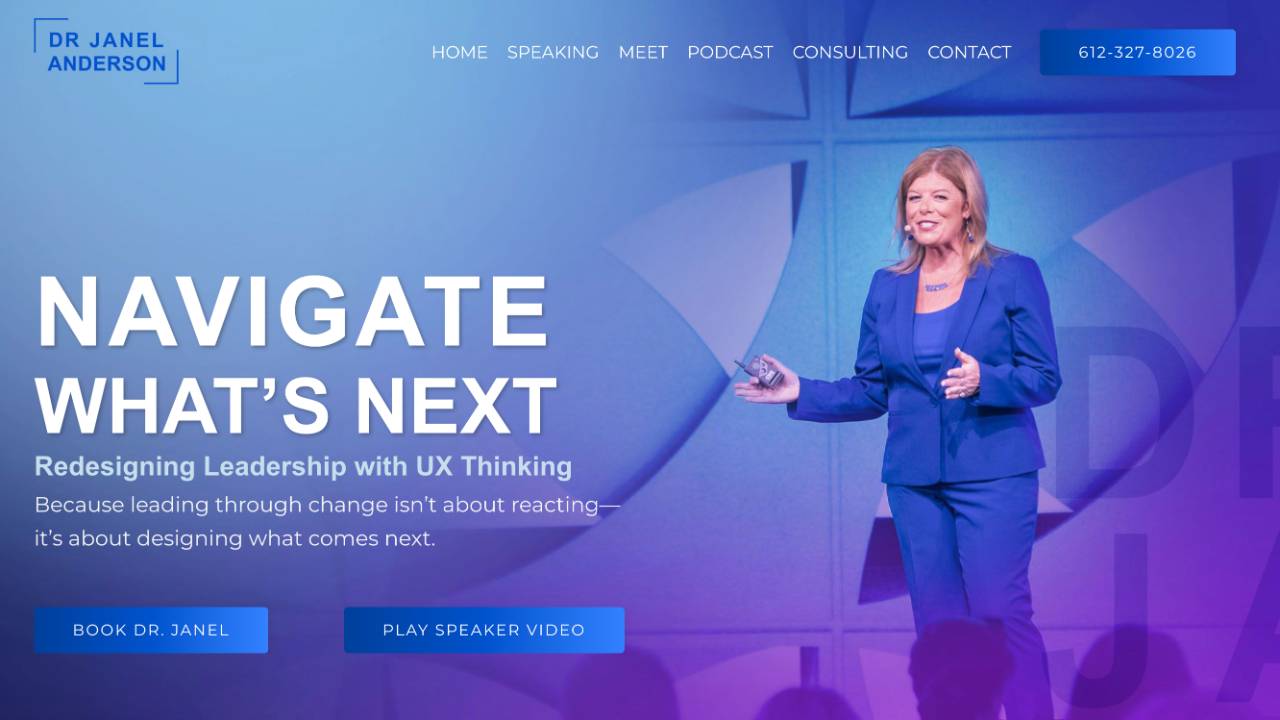
That was me with my new website and speaker demo reel.
Late, over budget, and held together with caffeine and sheer determination, this project taught me some of the most valuable lessons I’ve learned in years, and I’m sharing them with you so you don’t have to learn them the hard way.
In this episode, I take you behind the scenes and share the messy reality of creating something excellent. From scrapping an entire first draft to making tough decisions for the sake of clarity, and discovering the incredible value of working with the right partners, you’ll hear exactly what it takes to navigate the “messy middle” of any big project.
You’ll learn three key lessons that apply to any major initiative, whether it’s redesigning a website, launching a product, rolling out a new program, or even remodeling your home.
First, sometimes the entire first draft belongs on the cutting room floor, and courage is required to start over. Second, clarity often comes at a cost, and you have to let go of even the ideas you love to make your project truly shine. And third, the right collaborators don’t just help you execute the work, they help you become a better version of yourself along the way.
Whether you’re a leader, a creative, or just tackling a big personal project, this episode offers practical insights and real-world wisdom to help you make tough decisions, work with the best partners, and turn chaos into something extraordinary.
Listen and catch the full episode here or wherever you listen to podcasts. You can also watch it and replay it on my YouTube channel, JanelAndersonPhD.
If this episode resonates with you, subscribe, leave a review, and share it with a friend or colleague facing their own big project. Let’s embrace the messy middle and turn it into results we’re proud of.
LINKS RELATED TO THIS EPISODE:
Episode 222: Netflix and the Adjacent Possible: What Streaming Made Possible
EPISODE TRANSCRIPT
There's a moment in every big project where you say to yourself, what was I thinking? This is a terrible idea. Then later, when the project is finished, you look back at that final product and you think, oh, that's why I did it. Well, I've just come through this myself on a big project and I've learned all the important hard fought lessons so that you don't have to learn them the hard way like I did.
Today, I'm taking you behind the scenes of my brand new website and demo reel and sharing with you the really tough lessons that I learned along the way. Now, the whole project was late, it was over budget, parts of it were held together by sheer determination, duct tape and caffeine. But the lessons, well, these lessons are useful to anyone in any profession who's trying to create something excellent in a world that moves way too fast. Now, maybe you've heard of the messy middle. Well, trust me, this process felt like it was entirely the messy middle.
The time I almost scrapped the whole thing like multiple times. The big first draft that ended up in the trash, all of it. The moment that clarity smacked me in the face and forced me to cut out something that I absolutely adored, and the unexpected high of working with the kind of partners who make you better than you were when you started, all of that. And so much more came out of this project. So today I'm sharing with you three big lessons that I think apply to any major project, whether you're redesigning a website like I was launching a product, rolling out a new initiative at work, or remodeling your bathroom. So as we get into it, let me just explain to you what the project was at a high level and then I'll get into these things. Three specific big lessons.
Now, if you've been following my work for any length of time, you know that in 2025 I did some repositioning. So I haven't really changed my core content. But what I did is I took that decade of experience that I have in user experience design and design thinking and UX thinking, and really pulled that into the forefront of my work so that everything I'm doing, I'm doing through that lens of user experience thinking where we're designing for the end user. Now, as I looked at my marketing assets, primarily my website and my speaker demo reel, these are the two primary marketing assets that a keynote speaker like I have, I needed to update those to really reflect that new brand positioning. So it wasn't a total overhaul of everything I do. But it really was a tighter focus and I needed a new website and I needed a new demo real because they needed to reflect this. So that's what I was doing kind of writ large.
Now let's zoom in on the three lessons that I learned. Again, hopefully these lessons will apply to various aspects of things that you're working on so we can cut some of the learning curve down for you.
So lesson number one, sometimes the entire first draft belongs on the cutting room floor. So let's dive into my demo reel. The first version. Absolutely not. Nowhere close. Sometimes a speaker gets lucky and the first version just nails it. So this was not a minor tweak situation. It was a full on restart.
The entire thing went on the cutting room floor. And that put the project literally six to eight weeks behind schedule, which felt like a gut punch. And this was really frustrating because I was working with a terrific vendor. I had seen examples of their work, I'd spoken to many satisfied clients. I interviewed them, I felt thoroughly researched them. I had high expectations, maybe a little too high. And I was devastated, absolutely devastated. When I saw the first draft again, it so missed the mark that I asked them to start over.
Now, usually from the first draft there's a second draft and then a third draft. But my first draft was so disappointing, again, I asked them to scrap the whole thing and start over. Now, here's the lesson. The point of a first draft isn't necessarily to be good. The point of a first draft is to give you something to react to so that you can iterate from there. It's supposed to be informative, but for me it was, well, it wasn't, I guess it was perhaps so informative that it was about how to start over. But a first draft should show you what's missing, what's muddled and is not clear, what doesn't fit and where you actually want to go or where actually want to take it.
So some fine tuning. Now, in any profession when we cling to the first draft, it's because of sunk cost. So if you're not familiar with the theory of sunk cost, it would be, well, I already spent the money, I've already invested the time, I've already approved the plan. Now for me the sunk cost was time because they had taken, I mean the queue was already, I don't know, close to two months for them to even start working on my project. And then three weeks until I got that first draft. And so we have those two months plus three weeks. So it was really more than six to eight weeks. It was more like 11 or 12 weeks of sunk cost.
But let me tell you, excellence requires courage. Courage to scrap work that's not good enough. Courage to say we're starting over. Courage to protect the standard instead of the schedule. So I had to eat that sunk cost. And you can imagine it was not an easy conversation for me to have with the vendor. I wanted to, like, pack up my toys and leave their sandbox and go home. I wanted to quit working with them.
And I seriously considered asking for my money back and leaving the engagement entirely. But I had tons of evidence that they do good work, that they do excellent work. So I gave them a second chance. And interestingly, the second version of the reel, the one that came after the total reset, was miles better. It was tighter, it was clearer. It actually reflected the message that I wanted to bring into the world. Now, there was still some iteration left to do after that one, but we were absolutely on the right track. So the lesson takeaway here, sometimes the whole thing needs to end up on the cutting room floor because you don't get better until you have completely thrown out the bad work.
Okay, so that was my first lesson. Now let's move on to my second lesson. Clarity requires letting things go sometimes. So let's talk about clarity, the kind of clarity that costs you something, not money in this particular case. So the demo reel initially had two big ideas woven into it. They were both solid, they were both true, they were both part of my work and aligned with what I teach and what I believe. But together, they diluted the message and they were confusing. They created friction, and they forced the viewer to work too hard to follow the thread.
And so I had to make a really tough call. One of them needed to go, one of them needed to get axed. And since this is behind the scenes, let me explain a little bit more. So the two ideas were these. The first was the idea of the adjacent possible. And I've done a podcast episode on that. We'll link that up for you in the show notes. If you're not familiar with me talking about that concept, and I talk about that concept very specifically, and it's a primary focus in a keynote that I have called Expect the Unexpected Design for what's Next.
And then I had another prominent idea, and again, you've heard me talk about this on the podcast, and that idea is UX thinking for leaders. So using the user experience design principles inside the organization. So not just on the products and services that are external facing, but turning those same design principles inside the organization and helping them inform how we communicate better as leaders. So again, translating those core UX design principles into practical strategies for the leading the people side of the work that you do. Now, the footage that I had given to my vendor had footage from both keynotes and, and of course, a lot of other footage as well. But they took the footage from both of those two primary keynotes and tried to weave them together to tell a single story. And part of that was my direction to them in the design briefing that I wrote for them. I wanted both pieces in.
Now, all the work I do in keynotes is customized. And so when I do a custom keynote, I could, and I do sometimes use pieces of both of those keynotes together in one. But the particular footage that I had given them did not have both of those ideas woven together into a single narrative. I gave them two separate speeches and asked them to basically do the impossible. So in the two pieces of work that I gave them, those two ideas didn't come together. They didn't intersect. I wasn't ever talking about both of them sort of in tandem or how those two pieces work together. So sometimes I do that.
Again, it depends upon what the client needs when we're in that customization phase. And it, you know, what are their current needs and what kind of a transformation are they hiring me for? And again, the existing footage that I gave them did not have those two pieces connected. Now, fast forward just a moment into the future. About a month from now, I have a booking lined up where I am weaving those two big concepts together for a client. And you better believe that I have already booked the videography videographer to be there to get the footage for that. Now back to the footage that I had given the video production team. It didn't hang together. And if you've ever worked on projects where there's scope creep, you know how this goes.
You or the client may want everything but the kitchen sink to be included, but not everything belongs. And this happens in every organization. A team tries to pursue too many projects or too many priorities at the same time. Project contains too many features, or a product contains too many features. Maybe a strategy has too many different themes and too many different tactical ways to get it accomplished. Or a presentation has just way too many points, way too many slides. So again, you get the idea. And clarity comes at a cost.
Clarity is expensive. You buy clarity by letting go of other things, the things that get in the way of clarity. And in this case, it was something that I actually liked. So I had to cut one of these concepts because they just didn't hang together. Spoiler alert. It was the adjacent possible that got cut out of this particular demo reel. But believe me when I tell you, it will be back. And it might in fact, have its own demo reel soon.
But the upside of that high cost of clarity. Well, when you cut out the noise, the signal becomes unmistakable. And future, you can still integrate the ideas later once you have the right footage or the right opportunity again, which I already have plans for. Now, the lesson takeaway here is that you can sharpen the signal by reducing the noise. Most leaders want to add more, but great leaders, well, they know when to subtract instead of when to add.
All right, lesson number three. The right partners make you better. So this is the part of the project that surprised me the most, my partners. Now, I hired a professional website designer for the first time for this website. As someone who has a background in user experience and website design, I've always DIYed my own website. And to be fair, I'm a decent designer, but I'm not an excellent designer. I can make something that works. I can make something that's highly usable, but I can't necessarily make it beautiful. You see, the tools for doing that have evolved tremendously since I was actively designing things like, literally, we're talking two decades ago, and my skills in that area have just not kept up. And this time, I wanted a higher level of craft.
So I did my research, and I found a fabulous designer. We corresponded back and forth. I got a quote from her. Everything was lining up perfectly, except she happened to be going on vacation right when I wanted her to start. I almost hired somebody else out of impatience, but something inside me, some little spidey sense, my intuitive voice, said, wait, Diane is worth it. Best decision ever. Diane's work is exceptional, and she elevated the whole site in ways that I just couldn't have because she's an excellent designer and I'm just not. So that was the website team.
Now the video team, a full three notches above anyone I've ever used before. Their instincts, their edits, their creative eye. It all raised the bar. Even though that first draft ended up on the cutting room floor, what followed was totally worth it. Now, there is another part of my team that you maybe wouldn't expect played an amazing role in this, and that is my speaker colleagues. So let me give a nod to a team of my speaker friends who reviewed the first draft of the website and the demo reel along the way. And there are too many of them to mention by name. They understand the industry and they had the courage to tell me the truth when something was unclear or cluttered.
And when that was the case, they took the time to let me know. And again, they had the courage to tell me. Now they also took the extra time to let me know when something was going really, really as well. And for that I am eternally grateful. Now, again, let me give you a quick idea of how this happens. So we write copy. Like, let's just take the website, for example. We write the copy, we write the headlines, and we generally design how the page is going to look.
Well, I mean, a lot of that I had handed off to my designer, but she needed the right graphical assets. So I needed to go through all of my professional photos that had ever been taken of me, pictures of me on stage, screenshots from videos of me on stage, and find, like the ones with the right expressions. And she guided me, or she said, no, that one's not going to work, or you, you know, we need you looking directly at the camera. So she gave me some guidance. But a lot of this was up to me. Now I would send those early drafts of the website out to my speaker friends and someone will be like, not in your life, girl. Do not put you in that jacket on your website. Or, you know, various things like my, maybe my hair wasn't good or my makeup wasn't amazing or whatever.
So I got some hard feedback from my speaker friends as well as, again, they also took the time to tell me when something was right as it relates to the demo reel. This is again an iterative process, just like the website design was an iterative process. I went back and forth the designer on that multiple times. And again that was shown to, to several of my speaker friends. Now, as it relates to the demo reel, I showed some of those same speaker friends the demo reel who'd also seen the website. But then I took a risk. I reached out a layer or two or three layers deeper to some people who are also in the speaking community, but they haven't seen me speak. They hadn't reviewed my website.
And I would say we're more like colleagues who like each other as colleagues, as opposed to colleagues who really know what each other does. So they haven't seen me speak on stage. They generally know what I do, but not specifically. And so I took the risk to send to them this would be a little bit more like sending it to a prospective client who doesn't necessarily know my work. And that's where it felt a little bit riskier for me, because they didn't. I mean, I know they love me, but they didn't necessarily know my work. So any missteps were going to reveal themselves more with these folks than maybe with the people who know my work the best. And again, eternal gratitude to all of my speaker friends who took a look at both the website and multiple iterations of the demo reel.
So this brings me back to the amazing surprise it was to work with awesome partners. And so here is a universal truth. When you choose the right partners, your work expands, your ideas expand, your confidence expands your expectations of yourself expand. And I think we sometimes underestimate that in leadership. We're used to choosing things based on cost or speed or availability. But the real question we should be asking ourselves is, will this partnership elevate the outcome? Will this partnership make me a better leader, a better person? Because the answer to that determines the quality much more than the timeline ever will. So my key lesson takeaway here is that top notch collaborators don't just help you execute the plan, they help you become a better version of yourself while you execute the plan.
So back to that messy middle again. Now you get a sense of where I was in that messy middle. And then this project, this project started when Diane went on vacation, well, right after she got back from vacation in, gosh, mid July. So this has been a long process. Now I know some of you have gone out and taken a look at the website because that's been done for a while, but the demo reel just finished and just got uploaded to the website. So now it's kind of all tied together in a way that it hasn't been for months and months. So the messy middle was so real. The delays, the rethinking, the gut check moments, the existential crises, I mean, there were multiples of them, the almost start overs.
Messy, messy, to be sure. And remember that in any big project, there are going to be those moments when you second guess yourself and that's when you know you're in the messy middle. So hang in there, my friends. When you're in the messy middle, find somebody to share the mess with. Hold steady, stay the course and don't give up. That is my best advice to you because that's the part of the process that ends up really refining you as much as it refines the work. Okay, so there are my big three lessons again, that I hope you can learn from so that you don't have to experience them in as much pain as I did. The first lesson is some drafts are just meant to be left on the cutting room floor.
All of it. All of it of the first draft. Lesson two, Clarity requires letting go. Sometimes you have to kill your favorite parts of the project in order to have that clarity. And lesson number three, the best collaborators and partners make you better. Okay now, now that it's all finished, the late over budget and absolutely worth every minute of it, project is complete, I would love for you to see the final result. You'll get to see it and both the website and the demo video and you'll get to see what got brought to life. You'll get to watch that new demo reel that captures my latest thinking on user experience, thinking UX, thinking leaders think and the future of work.
And if you're curious how it all turned out, and I sure hope you are, and if you want to see that demo reel that finally hit the mark, you can find it right on the homepage of my website. Just head over to drjanelanderson.com or janelanderson.com they both point to the same place and that's where the new demo reel lives. And I would be so honored, my friends, if you would take a look and if you like what you see, please share it with somebody else. I appreciate you, appreciate you listening and I look forward to catching you next week right here on the podcast. Take good care.
